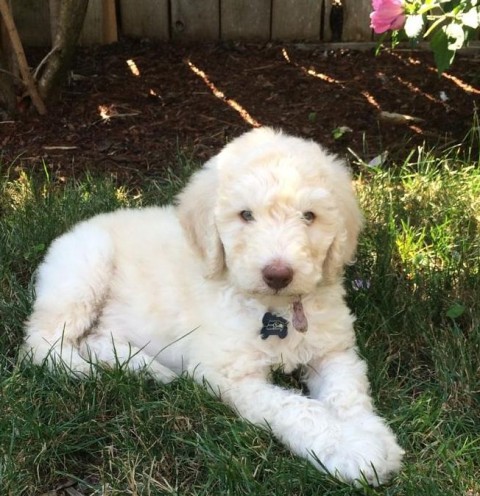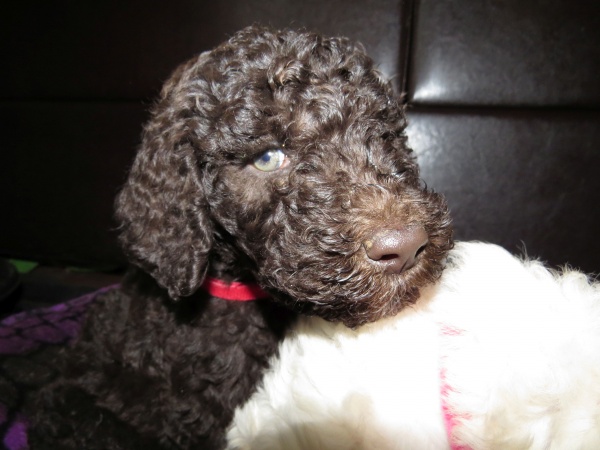

Puppies are very destructive, fun-loving critters. Just accept that if an object is within a puppy’s reach, it is going to get chewed up. Puppies have a deep-set urge to chew on any and everything. So make the decision early on that the puppy will not have free range of your house. Plan on it living temporarily on a porch, enclosed patio or other room with a mop able floor that can be puppy-proofed. Puppies love to chew electrical wires, eat inedible foams, cardboard and plastic, leather and cloth items. Most of these items amazingly pass through the puppy without more than some colic and diarrhea.
Keep plenty of rawhide chew sticks thrown about and available for the puppy. The next best thing to a room is a puppy playpen about the size of a child’s playpen. When you catch your puppy chewing on something he shouldn’t reprimand him with a sharp NO! and immediately given one of his chew toys. Then praise him effusively. Children’s toys make exceptionally poor and dangerous puppy toys.
There will be a lot of backsliding because their urge to chew is so great. Don’t criticize the puppy too much. Try to clear non-chewable items from his environment instead. When items cannot be removed (such as doors, etc.) you can spray them with bitters mist available from your veterinarian or pet supply store. It is a combination of essence of bitter apple, cayenne pepper, and a product I have never identified but which tastes like petrol. Amazingly, many puppies will chew objects drenched in this brew.

Around 4 to 5 months of age, puppies will start to get their permanent teeth. There are several things you can do, both to ease the pain and control the chewing.
Puppies lose their teeth in a distinct pattern: first the small front teeth come out. Then the premolars just behind the canines. Then the molars in the back come out (and you’ll see adult molars behind those erupting as well). Finally the canine teeth come out. Sometimes the adult canines erupt before the baby canines have come all the way out.
During this time, some discomfort, including bleeding gums is to be expected. Your puppy will want to chew more during this period of time, but it may also be too painful to do so (hence the suggestions above). You will probably find few if any of the teeth your puppy loses, as puppies typically swallow them.

If the dog makes a mess in the house – slap YOURSELF. You didn’t do your job, and that’s in no way the dog’s fault. You let him down. If you can’t keep supervise him without help, tether him to you. That way he can’t “wander off”.
–Mary Healy
The idea is to take advantage of a rule of dog behavior: a dog will not generally eliminate where it sleeps. Exceptions to this rule are:
To house train a dog using a crate, establish a schedule where the dog is either outside or in its crate when it feels the need to eliminate.
Using a mild correction (saying “No” in a firm, even tone) when the dog eliminates inside and exuberant, wild praise when the dog eliminates outside will eventually teach the dog that it is better to go outside than in. Some owners correct more severely inside, but this is extremely detrimental to the character of puppies. To make the dog notice the difference between eliminating inside and outside, you must praise more outside rather than correcting more inside.
The crate is crucial because the dog will “hold it” while in the crate, so it is likely to have to eliminate when it is taken out. Since you know when your dog has to eliminate, you take it out and it eliminates immediately, and is praised immediately. Doing this consistently is ideal reinforcement for the behavior of going out to eliminate. In addition, the dog is always supervised in the house, so the dog is always corrected for eliminating indoors. This strengthens the inhibition against eliminating inside.
In general, consistency is MUCH more important than severe corrections when training a dog. Before a dog understands what you want, severe corrections are not useful and can be quite DETRIMENTAL. Crating allows the owner to have total control over the dog in order to achieve consistency. Hopefully, this will prevent the need (and the desire) to use more severe corrections.
Housetraining is relatively simple with puppies. The most important thing to understand is that it takes time. Young puppies cannot wait to go to the bathroom. When they have to go, they have to go NOW. Therefore, until they are about four or five months old, you can only encourage good behavior and try to prevent bad behavior. This is accomplished by the following regime.
First rule of housetraining: puppies have to go to the bathroom immediately upon waking up.
Second rule of housetraining: puppies have to go to the bathroom immediately after eating.
You MUST confine them or watch them to prevent accidents until they are fully house trained.
This means that the puppy should have a place to sleep where it cannot get out. Understand that a puppy cannot go all night without eliminating, so when it cries in the night, you must get up and take it out and wait until it goes. Then enthusiastically praise it and put it back to bed. In the morning, take it out again and let it do its stuff and praise it. After it is fed and after it wakes up at any point, take it out to eliminate.
Make it aware that this is not play time, but understand that puppies get pretty excited about things like grass and snails and leaves and forget what they came outside to do! Use the same spot each time if you can, the smell will help the puppy remember what it is to do, especially after 12 weeks of age.
To make life easier for you later on, use a key phrase just when the puppy starts to eliminate. Try “go potty,” “let’s go,” or some similar phrase (pick one and use it every time you take them out). The puppy will begin to eliminate on command, and this can be especially useful later, such as making sure the dog eliminates before a car ride or a walk in the park.
Don’t let the puppy loose in the house unless it has just gone outside, and/or you are watching it extremely closely for signs that it has to go. The key to housetraining is preventing accidents. If no accidents occur (ha!), then the dog never learns it has an option other than going outside. When you are at home, rather than leave the pup in the crate, you can “tether” the puppy to you — use a six foot long leash and tie it to your belt. That way he can’t get out of your site in the house and go in the wrong place.