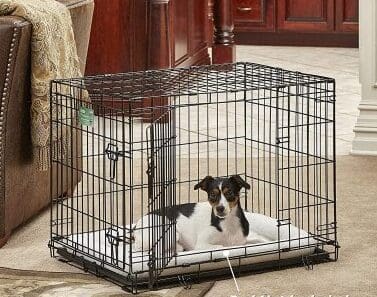
The Crate & Potty Training Reset
This a Crate Training Schedule for your adolescent (6–12 month old) puppy who still isn’t potty trained after your first attempt or maybe you’ve never really seriously attempted. This is for you! This is our stricter crate and potty training plan for older puppies. Helping you both learn to build consistency, reduce accidents, and to teach your older puppy reliable housebreaking habits that you both desire!
Most dogs catch on quickly when given clear structure and kind guidance.
The Usual Potty Training Timeline: Puppies are typically fully potty trained by 4–6 months old, but some puppies can take 6-12 months and this all depends on your training consistency and your training method.
Crate Training Schedule For Adolescent Pups
Repeat this schedule for 7–14 days (or until your adolescent Puppy is reliably potty trained).
Morning
- Out of crate → clip on leash → go out to potty immediately
- Breakfast fed in crate
- Back outside on leash to potty
- Crate rest: 60–90 minutes
Midday
- Potty on leash
- Supervised play/training outside without leash (20–30 minutes)
- Potty
- Crate: 1–2 hours
Afternoon
- Potty on leash
- Supervised time outside off leash, short leash walk or on leash time in house
- Potty on leash
- Crate nap: 1–2 hours
Evening
- Dinner fed in crate
- Potty on leash
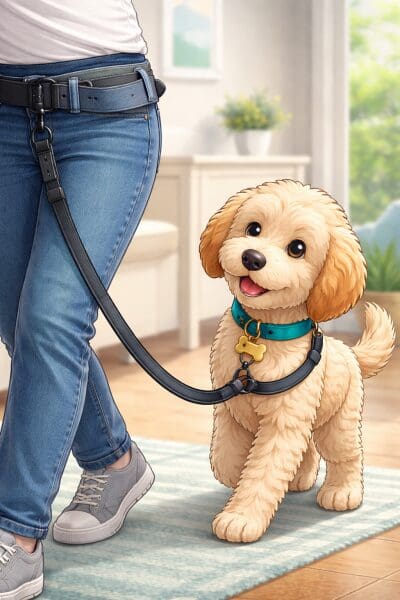
- Calm family time (with hands free leash for extra supervision – off leash in the house must be earned)
- Potty break
- Crate: 60–90 minutes
Bedtime
- Final potty on leash
- Crate overnight (no exceptions)
Important Crate Rules
No Bedding for Now
- Remove pee pads, dog beds, and blankets, wash the crate if it’s ever been used as a potty spot in the past.
- A small stuffed animal is fine for comfort
- Beds can be added once your puppy is consistently potty trained
Some puppies naturally avoid soiling their sleeping area, but not all. Removing bedding now will prevents accidents and setbacks in the future.
Crying ≠ Potty
- Only take your puppy out after at least one minute of quiet
- If unsure whether it’s whining or a potty need, take them directly to their favorite potty spot on leash, then return to the crate—no play or treats all busines
This teaches your puppy that crying does not equal freedom, helping prevent nonstop whining and setting clear expectations.
Tips & Extras
- Stay calm and confident when you train your dog. Not excited, nervous or high energy. Your puppy learns to read your energy before commands or gestures, so always use a steady, clear voice and clear body language to help them to feel calm, secure and focused.
- Don’t stress about a set finish date. Puppies all learn at their own pace. Don’t give up. If needed you can reevaluate or edit their schedule but don’t give up completly, stick to the schedule until it works.
- You’ll know it’s time to scale back on such a strict schedule whenever your puppy can go at least a week with zero accidents.
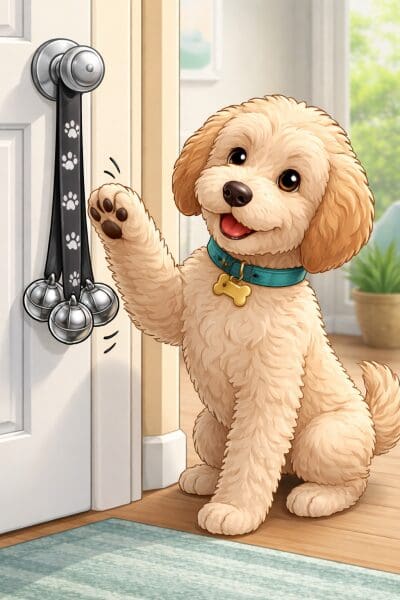
- Potty Bells can be helpful as an addition to your crate training but just bells without crate training or umbilical training will take much longer time with more accidents.
Get the Right Tools for the Job!
To save you time and money, I share pet products I’ve personally used and trust to recommend to you. All recommendations below are linked to Amazon for your convenience.
Potty Bells
Using Potty Bells
Potty Bells can be a great addition
to your crate training schedule, but bells alone don’t always work with every dog and are only meant to teach dogs how to notify you
but they don’t always work if they still don’t understand what they’re notifying you for.
Most importantly, teach your puppy with
consistent crate training that they need to go potty outside every single time and at the same time you can practice using the potty bells before you take them outside. Just be consistent with the methods you choose.
Try BLUETREE Dog Doorbells on Amazon!
Umbilical Leash Training
What is Umbilical Leash Training?
Umbilical training is a very helpful potty training tool for dogs or puppies who need extra support.
It’s a method that involves a leash (typically 6 feet in length) tied around the owners waist whenever your puppy is out of the crate so you can easily redirect or take outside when needed. If you notice them sniffing the ground,
circling around looking for a spot or whining, barking etc. You can quickly take them outside.
Crates
During Crate Traing the Crate Size is Important!
The crate should only be big enough so your dog can stand up, turn around, and lie down comfortably—nothing more, nothing less .
- Most metal crates come with an adjustable divider you can use to insert in the crate to make it the right size for your growing puppy.
- Leaving 2–3 inches of space around your puppy.
In a crate that’s too big the untrained dog may attempt and fail to pick one side of a bigger crate to go potty and one side to sleep but sadly, they’ll end up going everywhere instead… including on themselves.
So, while you are in the training period the smaller the open space in the crate the more likely they’ll be successful.
Recommended Crate Sizes:
- Small Dogs: 20 lbs and under – 24-30 inch crate
- Medium Size Dogs 30-40 lbs – 36 inch crate
Once your dog is fully potty trained Then you can make their crate space bigger, and add the cute dog bed – Until then These things must be earned.