

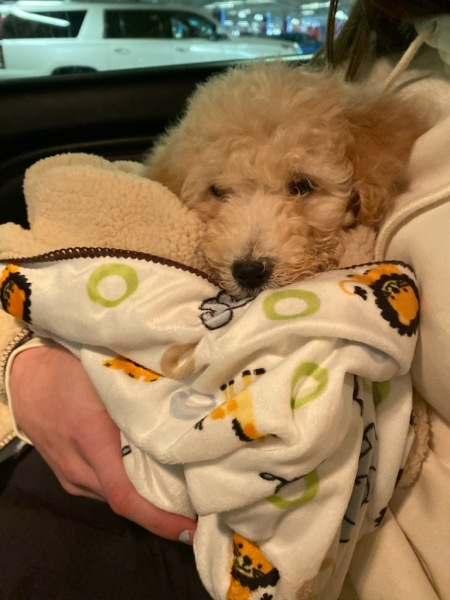


The Labradoodle possesses a good combination of behavioral characteristics from its parent breeds. Labradoodles are outgoing but not pushy, self-confident but not aggressive and super smart but not overly independent. They’re loyal, friendly, silly, eager to please, even-tempered, gentle and kind. I’ve never met a Labradoodle that didn’t do well with kids and other dogs and yes, even cats!
Yes, the Labradoodle is a very smart, loving and human focused breed and they can also be very intuitive to human emotions which makes them an outstanding choice for service and therapy work.
Labradoodles are good watchdogs but are void of aggression so they’re definitely not considered a good “Guard Dog” due to their friendly and non-aggressive temperament but they do make good watch and alert dogs. For example, a Labradoodles will definitely let you know when someones on your property and their bark is deep and loud enough to scare off just about anyone thinking about trespassing.
The Australian Labradoodle and the higher generation Labradoodles have a low to non-shedding coat that doesn’t smell like so many other dog coats and is allergy friendly. Coats can be wavy fleece or curly wool and in either case they are soft and silky. These dogs don’t have an undercoat. A higher generation Labradoodle does not usually shed, but they will begin to lose any loose hair if they’re not properly groomed often enough just like all furry mammals (including humans).
There are so many different Poodle mixes nowadays that it can get pretty overwhelming and confusing when you’re trying to learn the difference between them all but one of the #1 originals is the Labradoodle and the Australian Labradoodle.. so, what’s the difference?
[[su_tabs][su_tab title=”The Labradoodle” disabled=”no” anchor=”” url=”” target=”blank” class=””]
So, the straight “Labradoodle” or what I like to call the “American Labradoodle” only has the Pure Lab and the Pure Poodle in it’s genetic makeup, there may be multiple generations of Labradoodle to Labradoodle breedings like with the Multigen Labradoodle but they’ll still only have the genetics of the Lab and the Poodle.
[/su_tab][/su_tabs]
[su_tabs][su_tab title=”The Australian Labradoodle” disabled=”no” anchor=”” url=”” target=”blank” class=””]
The Australian Labradoodle is a hybrid cross breed originally created by a breeder in Australia named Beverly Manners, her kennel name is Rutland Manors. She wanted to improve the coat quality of the original mix which was solely between the Lab and the Poodle (the Labradoodle) so, over multiple generations and 30 years of development – she carefully selected 4 more pure breeds for their desirable traits and they were also infused into her Australian Labradoodle bloodline – this included the English and American Cocker Spaniels, the Curly Coated Retriever, Soft Coated Wheaten Terrier and the Irish Water Spaniel.
Today most reputable Australian Labradoodle breeders are only breeding Australian Labradoodles to other Australian Labradoodles to keep their bloodline pure and this has been going on for many generations now – making the Australian Labradoodle basically it’s own pure breed (depending on the bloodline) and in Australia, the Australian Labradoodle is considered to be “a pure breed in development”.[/su_tab][/su_tabs]
So, what’s the real difference? To me that is not an easy question to answer besides genetically… they don’t look a whole lot different – some Australian Labradoodles do have a shorter face and some tend to be smaller but not always. To be honest there’s not a lot of hard set facts to distinguish between the two besides their genetics. The Labradoodle and the Australian Labradoodle both come in many sizes, coat types, colors and temperaments and at the core of ALL Labradoodles.. is a very sweet and loving family dog that’s incredibly smart, low to non-shedding and great for families with allergies and they both make outstanding service and therapy dogs.
This will greatly depend on the generation of Labradoodle. The first Labradoodles were originally created by crossing the non-shedding Poodle with the easily trained Labrador Retriever with the intention of producing a great seeing-eye dog that was also hypoallergenic… well the first generation cross between these two pure breeds (also known as the F1) wasn’t consistent enough to be considered a non-shedding dog so, at this point in the Labradoodle’s story – very few serious Labradoodle breeders will breed the first generation cross between the pure bred Lab and the pure Poodle and for this exact reason.
The higher generation Labradoodles like the F1B and the Multigeneration Labradoodles are considered to be very low to non-shedding dogs and are truly a great option for families with mild to severe pet allergies. You just have to be careful which generation of Labardoodle you’re adopting.

This page has a lot of information about the Labradoodle including the different generations, colors, care and history.

A Labradoodle is a crossbred dog created by crossing the Labrador Retriever and the Standard or Miniature Poodle. The term first appeared in 1955, but was not popularized until 1988, when the mix began to be used as an allergen-free guide dog.

Labradoodle Generations explained on this page, use the anchor links below:

F1 Labradoodle
The first known use of the term “Labradoodle” was by Sir Donald Campbell to describe his Labrador/Poodle cross dog in his 1955 book, “Into the Water Barrier”. However, the Labradoodle became better known in 1988, when Australian breeder Wally Conron crossed the Labrador Retriever and Standard Poodle at Guide Dogs Victoria. Conron’s aim was to combine the low-shedding coat of the Poodle with the gentleness and train-ability of the Labrador, and to provide a guide dog suitable for people with allergies to fur and dander.
Read: My Story: I Designed a Dog, by Wally Conron
Labradoodles are sociable, friendly, non aggressive, and extremely intuitive.
Their intelligence and high train-ability make them well suited for guide dogs, therapy dogs, and other assistance dogs and are widely used around the world for this purpose. Their non allergic coats make them popular among people who have been unable to enjoy pets because of their allergies.
There are different generations of Labradoodles and it comes down to personal preference..below you will find descriptions of the different generations of Labradoodles available today to help you choose which generation is right for you.

Group of Labradoodle Assistance Dogs
The Labradoodle Temperament: The temperament of the Labradoodle can be described in one word, FUN! They are happy, loyal, affectionate, friendly, playful, confident, non-aggressive, intuitive, and clever. A Labradoodle is generally easy to train, intelligent and eager to please. They usually do well with other dogs and pets in the household, and good with children. Overall, Labradoodles make an excellent pet for a first-time dog owner.
Labradoodles can be calm and quiet while curled up on your feet, but ready to jump up and play a game of fetch with only a moment’s notice. Labradoodles are not generally ideal guard dogs; although they will alert bark, they’re more likely to invite an intruder in for tea on the good china.
READ MORE: ABOUT THE LABRADOODLE BREED STANDARD
Examples of the Labradoodles Hair Coat, Wool Coat and Fleece Coat. (left to right)
The Hair coat, which is similar to fur in shedding breeds, is the least popular. Hair coats can shed at varying degrees and usually have a normal doggy odor. This coat is usually seen in first generation Labradoodle.
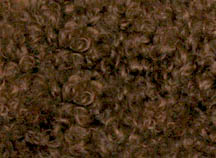
The second texture, called a Wool coat, is dense and similar in feel to a lamb’s wool, hence its descriptive name. Wool coats hang in loose curls and aren’t dense. Generally, the Wool coat doesn’t have a “doggy” odor and it’s usually non shedding. The Poodle has a Wool coat and is the most successful for allergies.
The Fleece coat has a silky texture often described as an Angora goat texture. This coat ranges from wavy to ringlets and is the usually the ultimate goal for most Labradoodle breeders. It is a non shedding coat and does not have the doggy odor that most hair coat dogs have.
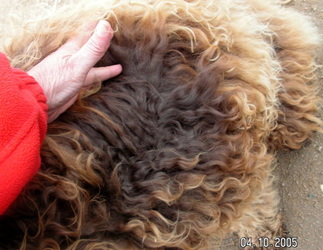
True Chocolate Fleece weathered at the tips
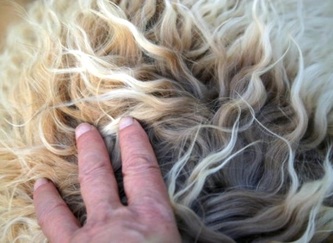
Cafe Wavy Fleece with weathered tips
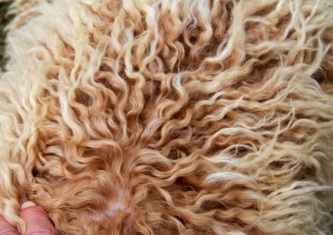
Apricot – Curly Fleece – photo credit Rutland manor
STATISTICS FOR LABRADOODLES – Including probability of shedding and allergy response in regards to generations
There are several different colors of Labradoodles depending on the color genetics of the parents. Some of the colors available include Black, Silver, Sable, Blue, Cream, Apricot Cream, Chalk, White, Caramel, Gold, Red, Apricot, Chocolate, Parchment, Lavender and Café.. as well as multi colored such as the Parti, Tuxedo, Abstract, Phantom and Brindle.
Most Labradoodle puppies coat color will change from puppy to adult. Some may darken while most will lighten. They have amazing highlights.
Here is a Great page on colors of the Labradoodle
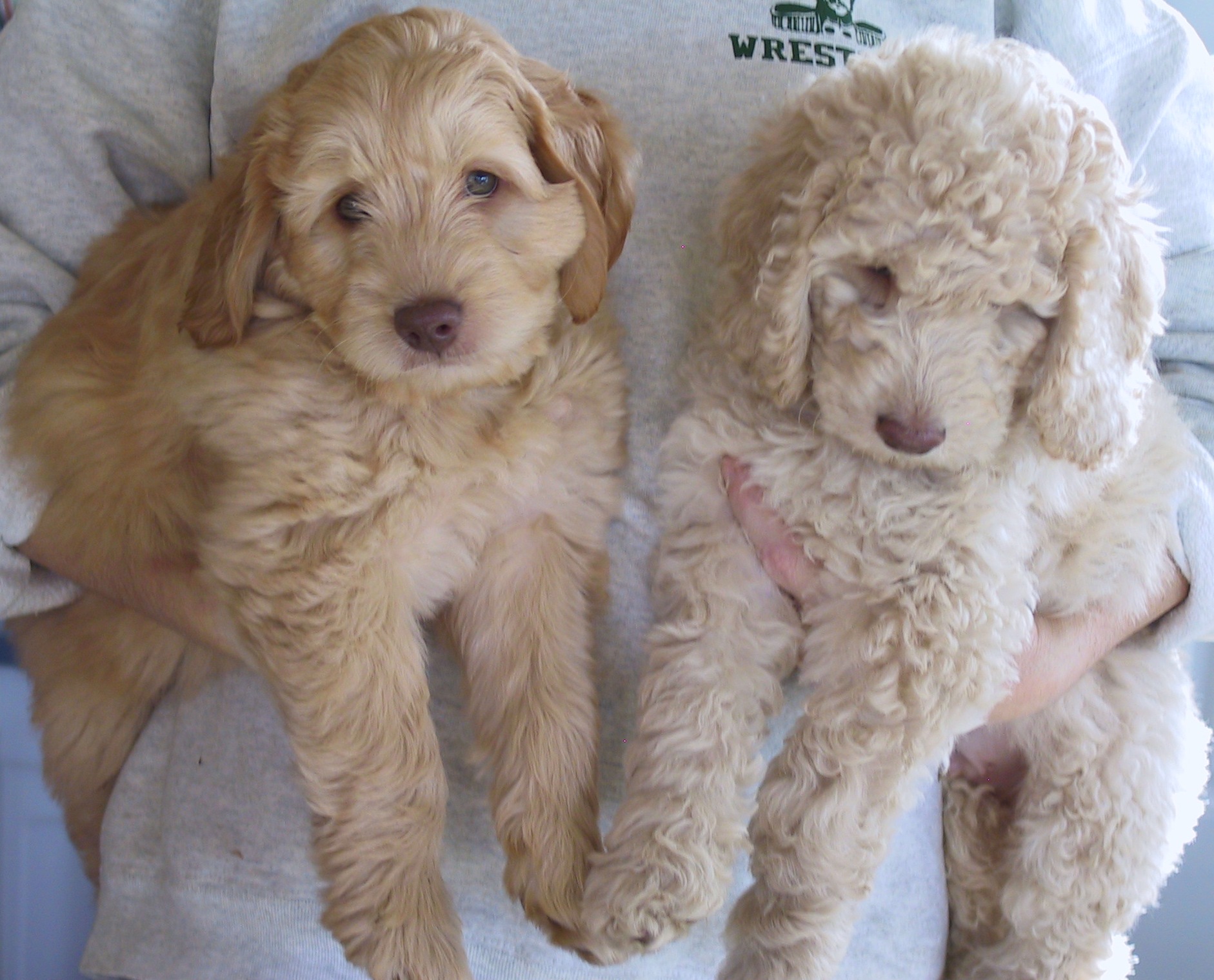
Example of Coat Differences in the same litter – Fleece & Wool
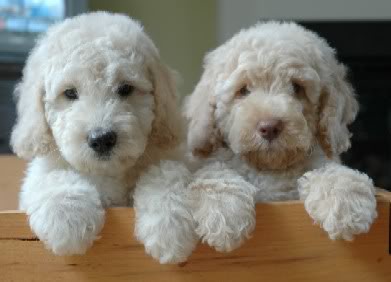
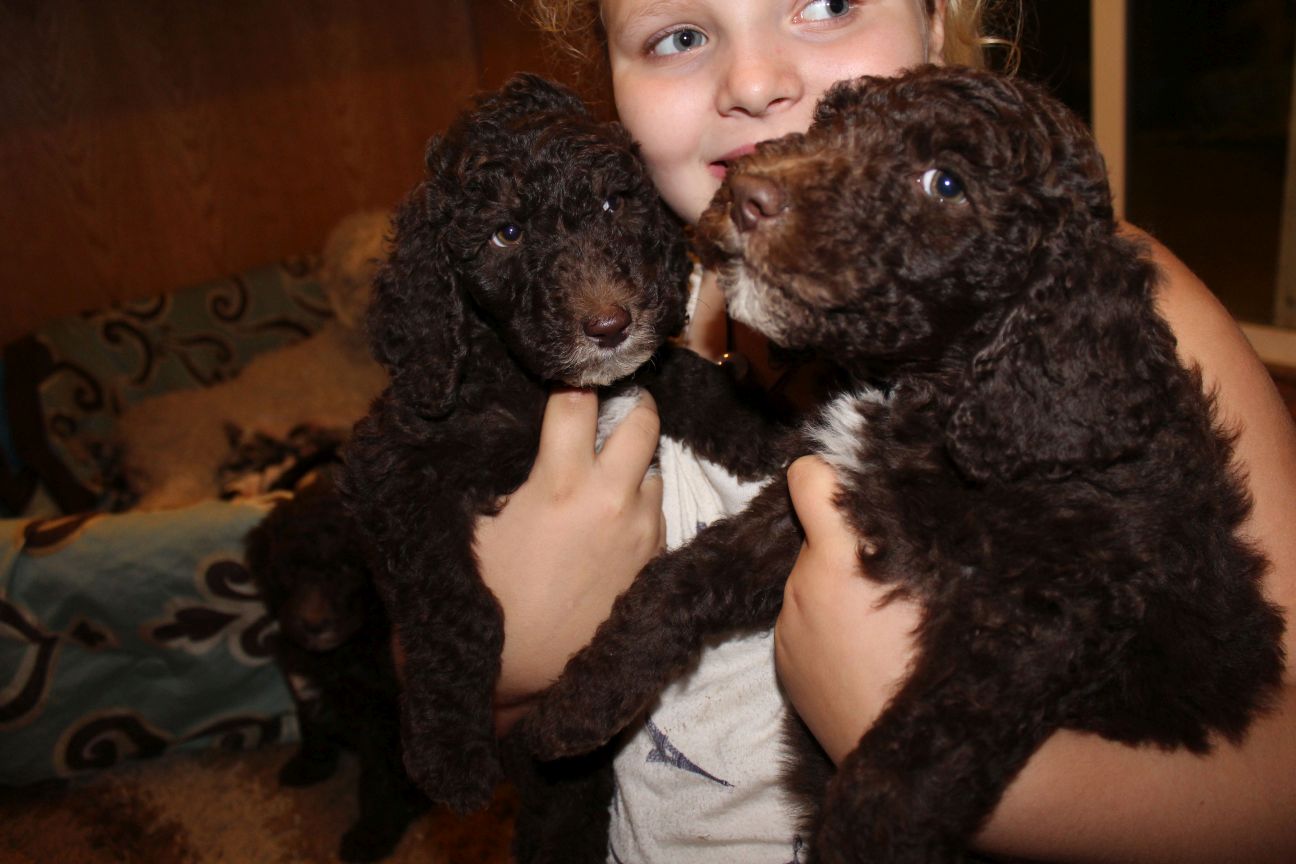
Wool coated Labradoodle Puppies – Brown and Black Noses
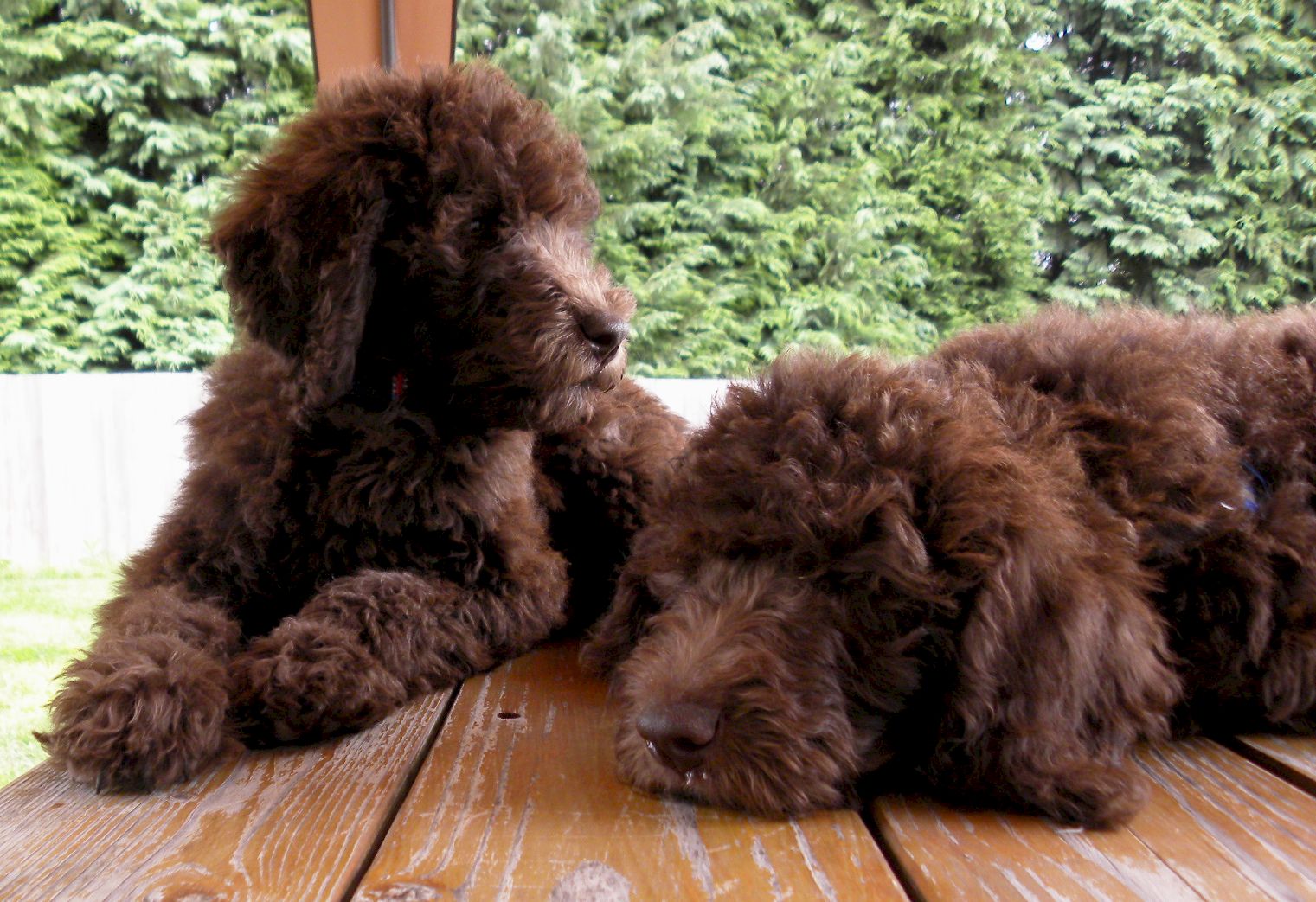
Tippy as a chocolate puppy (left)

Tippy as a silver beige adult
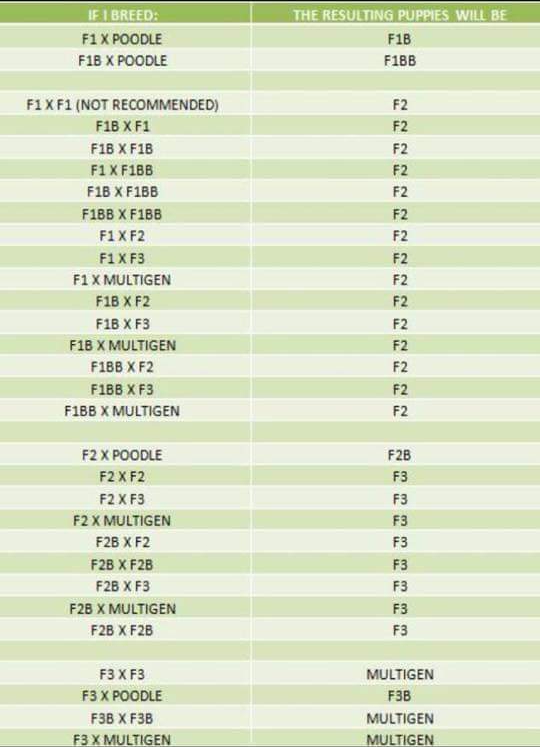
Labradoodle Generation Chart
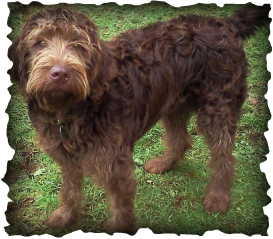
Brun – F1 Labradoodle
A first generation hybrid Labradoodle is the product of a Labrador Retriever and a Poodle – 50/50 genetic makeup, this is the first generation of the labradoodle breed. In this particular Labradoodle cross hair type can be smooth like a Lab or wirey look like a Irish wolfhound or Wavy/shaggy, they usually shed some or a lot, pups in the same litter can vary in coat and physical traits. This is not the best cross for people with severe allergies.
As first generation hybrids, these dogs have the added health benefits associated to Hybrid Vigour. This is a phenomenon in animal breeding referring to the first cross between two unrelated purebred lines is healthier and grows better than either parent line.

Charlotte – True Chocolate F1B Labradoodle from Dreamydoodles “Tippy”
F1b results when you take the above referenced F1 Labradoodle and breed with a Standard poodle. Since the F1 dogs do shed and have a course wiry type coat, the poodle is bred with the F1 Labradoodle to “correct the coat”. The F1b generation can favor more of a poodle type coat with the wavy/curly fleece and sometimes wool coats but still retains the unique Labradoodle look.
Many F1b’s have thick, soft hair that is wavy to curly. They’re often frosted or highlighted in color. Their size often varies between 55-65lbs. They do not shed* and are the closest it comes to being a “hypo allergenic” dog. They’re highly intelligent and friendly. They’re often used as seeing-eye dogs and service dogs because of their incredible intelligence and their size and strength. F1b’s are the most sought after generation.
The F1B generation is still close enough in the breeding tree to benefit from hybrid vigour. With each successive generation vigour is lost.
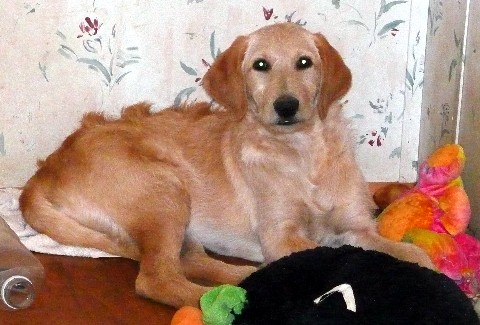
F2 Labradoodle Adult credit: S.D.P kennels
F2 = F2 would be considered the second generation Labradoodle. F1 Labradoodle x F1 Labradoodle. F2 Labradoodles are also a 50/50 split, the same as the F1, just bred one more generation. These puppies also shed as the the F1. The F2 generations is the most varied generation possible as you can see from the example image, the litter may contain puppies that look like either parent breed.
Breeding an F1 to an F1 is unwise unless the breeder is trying to create a new breed and doesn’t mind breeding a lot of funny looking , and possibly unsatisfactory, dogs on the way.
If an F1 is crossed with another F1 there would be many hundreds of possible combinations produced in the “F2″ generation. These offspring would range from almost the same as one grandparent to almost the same as the other, with every possible combination in between and while most of these would be more heterozygous than the grandparent generation most of them would be less heterozygous than the parent F1’s.”
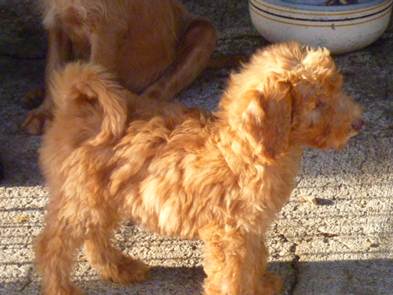
F2b Labradoodle
A second generation backcross pup (F2B) is the result of a Labradoodle (F1) bred to a Labradoodle backcross (F1b). Although three generations in the making, F2b’s are technically second generation dogs. These Labradoodles are most often non-shedding and allergy friendly. This is also the first generation of the multi-generation Labradoodles.
Although there is less vigour in this generation than in the first, the second generation backcross still is close enough in the breeding tree to the original hybrid to still benefit from hybrid vigour. With each successive generation vigour is lost.
F3 Generation Labradoodle: An F3 Labradoodle is a mating between a F2 and another F2 or higher gen dog (3rd Gen)

Multigen Labradoodle from Tippy and Hershey
Multigeneration Labradoodles or Multi-gen – When a labradoodle is 3 or more generations in to the breed they are considered Multigeneration Labradoodles. This allows knowledgeable breeders to refine the personality, physical attributes, and coat types. The Multigeneration Labradoodles are usually allergy friendly and have a more desirable coat in texture and quality. This is the generation that we breed here at Dreamydoodles. We also breed the F1 Generation on occasion as well but our main goal is to produce exceptional Multigeneration Labradoodles using our bloodline.
Coat Maintenance: moderate to high care
Coat Description: Coat continues to grow in length and requires combing and occasional grooming. It is thicker than a first generation Labradoodle and can have a curly, fleece or wavy coat type.
Shedding: almost all are completely non-shedding (see the stats in the Dood Database)
Allergy Friendliness: Multigenerational Labradoodles are recommended for families with moderate to severe allergies.
The Confirmed and Approved Parent Breeds of the Australian Labradoodle are: Poodle (Standard, Miniature, Toy), Labrador Retriever, Irish Water Spaniel, Curly Coat Retriever, American Cocker Spaniel, and English Cocker Spaniel. However most breeders are just breeding ALD’s to ALD’s at this point.
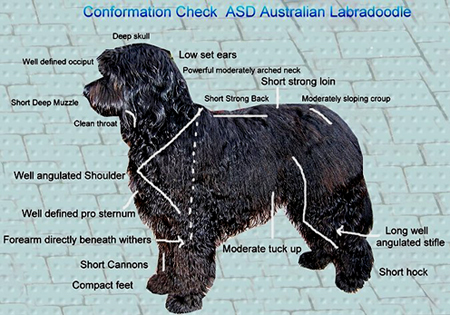
ALAA LABRADOODLE TRAITS AND STANDARDS
More info on the Australian Labradoodle breed standards and general info can be found here: The ALAA – alaa-labradoodles.com
The short answer is that the Australian Labradoodle has other dog breeds infused into their blood lines, in addition to Labrador and Poodle. For example, when introducing the brown color into the Australian Labradoodle breeders in Australia used a brown Irish Water Spaniel. This is where our philosophy at Dreamydoodles differs. At Dreamydoodles, we feel Labradoodles should stay a breed of just two dogs, as was the original idea.
In the late 1980’s, Tegan Park and Rutland Manor, the two founders of the Australian Labradoodle as we know it today, began infusing several other breeds into early generations of their Lab/Poodle crosses, in an attempt to improve temperament, coat, confirmation, and size. The infused breeds included Irish Water Spaniel as well as the American and English Cocker Spaniel. The resulting Labradoodles subsequently have been bred to each other, continuing the multi-generational tradition.
I have found that the Australian Labradoodles have a shorter muzzle and are stockier and shorter than the American Labradoodle.

SIZE CATEGORIES
Labradoodles & Goldendoodles come in three different sizes. Measuring should take place from the floor to the top of the shoulder, not to the top of the head.
Standard 22 to 24 (not over 25) inches (or about 53-63 cm) from the wither to ground measurement. The ideal size for the female is 22-23 inches and the male is 22-24 inches. Weight range tends toward 23-30 kg (about 50-65 lbs). Oversize is a major fault.
Medium 17 to 20 (not over 21) inches (or about 43-52 cm) from the wither to ground measurement. The ideal size for the female is 17-19 inches and the male is 18-20 inches. Weight range tends toward 13-20 kg or (about 30-45 lbs).
Miniature 13 to 16 (not over 17) inches (or about 35-42 cm) from the wither to ground measurement. There is no correlation between height and sex in the Miniature size. Weight range tends toward 7-12 kg or (about 15-25 lbs). Undersize is a Major fault.
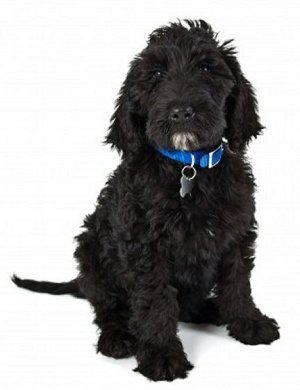
A general rule of thumb is to add both the parents weights together and divide by 2 to get an average adult weight on the puppies. Within any litter there may be puppies that fall above or below the projected adult weights. Some Standard sized have grown to over 100 pounds.
When provided with regular checkups, proper care and a healthy diet, this breed will usually have an average life expectancy of between 12 and 15 years.
The Labradoodle is a new breed for the most part and as a result, there is not a lot known at this time about their overall health and problems which they may suffer from. The breed itself, like most designer breeds was bred to produce the best of both the Poodle and the Labrador breeds. As a result, many of the health issues that these breeds may suffer from have been minimized in the Labradoodle breed. Still, prospective owners should be prepared for possible problems such as Progressive Retinal Atrophy, eye disorders and hip dyslpasia like most large breed dogs they can develop hip problems. Some Labradoodles may have problems with their ears due to the fact that they can grow a lot of hair in their ears like Poodles, this hair must be plucked out on a regular basis to avoid excessive moisture which can cause yeast infections. Here is a video on how to Pluck the hair from your Labradoodles ears.
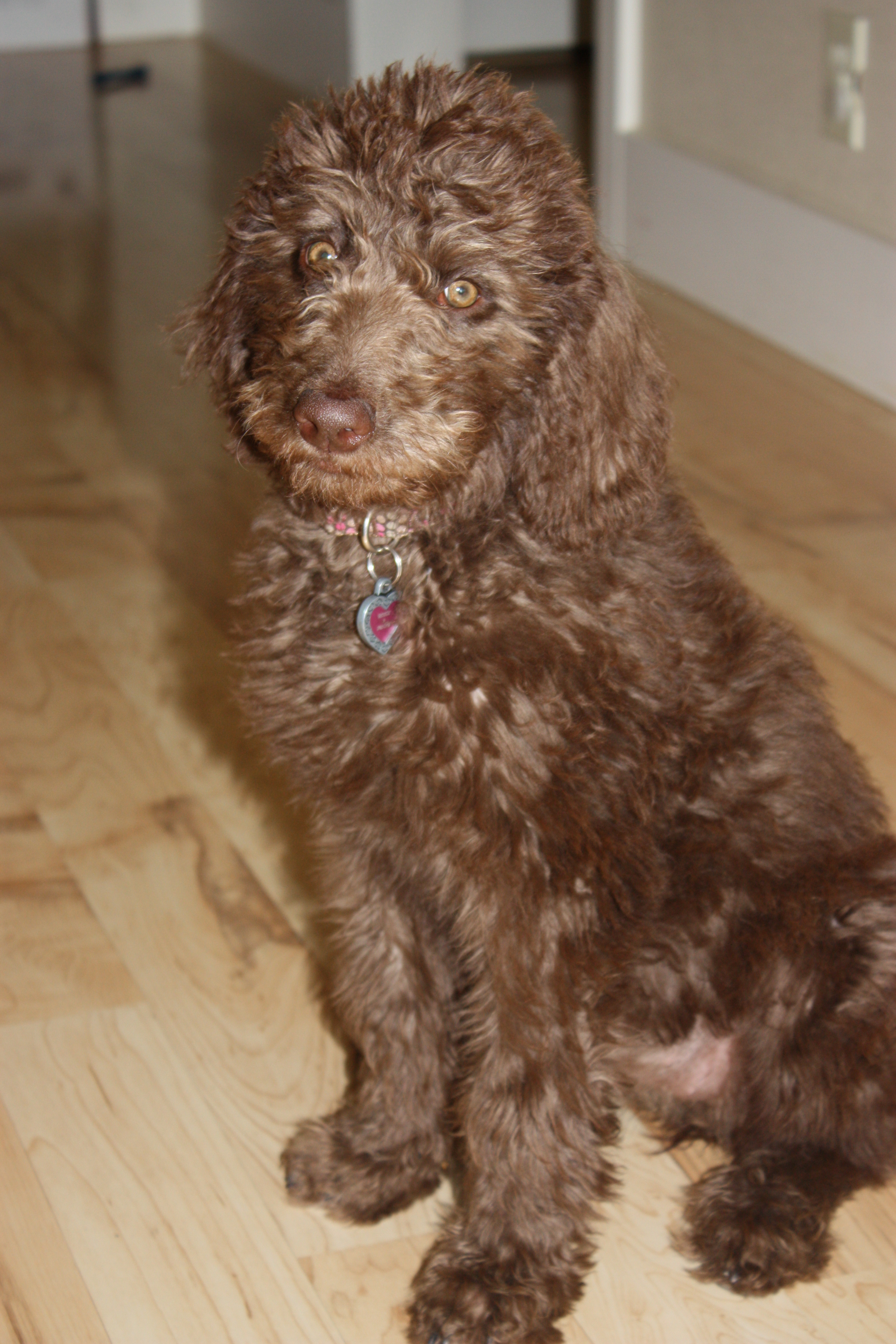
The Labradoodle will require daily exercise as well as play time in order to be happy and healthy. Dogs that are not provided with sufficient play and exercise time are likely to become bored. The exact grooming needs of a Labradoodle will depend on the type of coat that the dog has.
A dog that has more a poodle type coat may need grooming and trimming on a more frequent basis than a dog that takes more after the Labrador side. It is important to make sure that the ears are checked on a regular basis in order to prevent yeast infections. In the event that burrs become embedded in the dog’s hair, then it will need to be plucked out, especially around the paws
Check out the Doodle Do! – Instructions for groomers – Labradoodles, Goldendoodles and Aussiedoodles
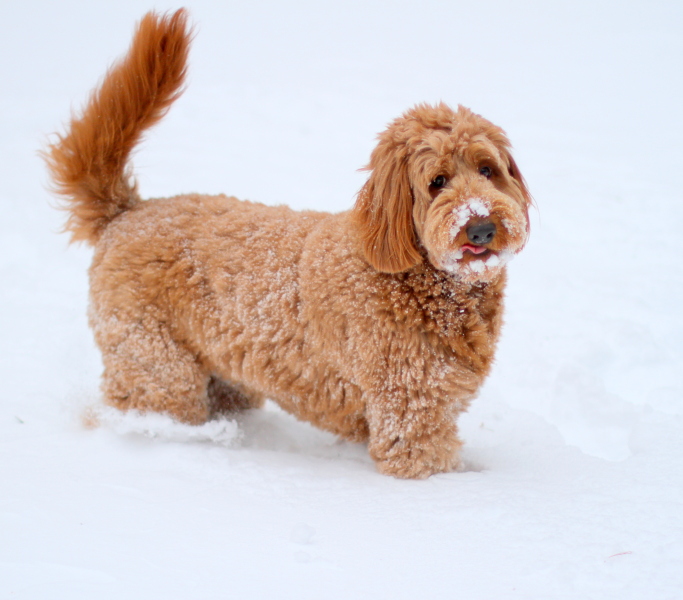
The best environment for a Labradoodle is by their owners side in a home with plenty of opportunity to play and exercise. This is a dog that does enjoy human companionship and should not be left alone for long periods of time. Labradoodles should mainly be inside dogs.
We have a Private Group on Facebook that's just for our Dreamydoodle Puppy Families!
Plz Click Below to Join Us.. Please don't forget to answer the questions on the join request screen so our Admins know to accept your request!

